Choosing sportswear for a team involves much more than selecting a shirt design and adding a club badge. Whether you are buying for a football club, rugby team, cricket club, school, university, academy or another sporting organisation, the manufacturer you choose can affect everything from garment quality and sizing to branding consistency and delivery.
A reliable sportswear manufacturer should be able to turn your ideas into practical, comfortable and professional teamwear while maintaining consistent quality across the entire order. Before committing to a supplier, it is worth looking closely at their manufacturing capabilities, customisation options, fabrics, communication and approach to bulk orders.
Here are the key factors teams should consider before choosing a sportswear manufacturing partner.
1. Look for Experience in Team Sportswear
Sportswear manufacturing is different from producing ordinary fashion garments. Players need clothing that can withstand movement, repeated washing, regular training and the demands of their particular sport.
Look for a manufacturer with experience producing garments specifically for sports teams. Ideally, the supplier should understand the different requirements associated with multiple sports.
For example, the construction of custom football kits needs to support running and unrestricted movement while remaining lightweight enough for competitive play. Rugby apparel may require a different approach because of the physical nature of the game.
A manufacturer with experience across several sports is also useful for organisations managing multiple teams or sporting programmes.
2. Check the Range of Customisation Available
One of the main reasons for ordering directly from a manufacturer is the ability to create sportswear around your own identity.
Before choosing a supplier, establish exactly what can be customised.
This may include:
- Club colours and garment patterns
- Team badges and logos
- Sponsor branding
- Player names and squad numbers
- Individual initials
- Collar and sleeve designs
- Fabric options
- Matching training garments
Good customisation should go beyond simply placing a logo on an existing shirt.
If your organisation wants a distinctive appearance, the manufacturer should be able to develop a coordinated design that reflects your club colours and branding across different garments.
3. Understand the Fabrics Being Used
A sports kit can look impressive in a mock-up but still perform poorly if inappropriate fabric is used.
Ask your manufacturer about the materials available and why particular fabrics are recommended for your sport.
Breathability and moisture management are especially important for high-intensity activities. Lightweight performance fabrics can help players remain comfortable during matches and training sessions, while appropriate stretch can improve freedom of movement.
Durability matters too.
For physically demanding sports, teams should pay particular attention to fabric strength and garment construction. When sourcing custom rugby kits, for example, materials and seams need to be appropriate for the contact, pulling and repeated movement associated with rugby.
A knowledgeable manufacturer should be able to recommend materials rather than simply asking you to choose from a list.
4. Ask About the Printing and Customisation Method
The way a design is applied to sportswear can affect its appearance, durability and design possibilities.
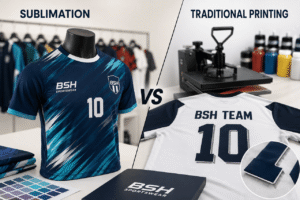
Sublimation is commonly used for modern performance sportswear because the design is transferred into suitable fabric rather than sitting on top as a separate layer. This allows manufacturers to incorporate detailed patterns, multiple colours, numbers and other design elements into the garment.
Other branding techniques may also be appropriate depending on the product and required finish.
Ask your supplier how they intend to reproduce:
- Team crests
- Sponsor logos
- Numbers
- Names
- Patterns
- Small design details
Understanding the production method beforehand reduces the risk of receiving garments that do not match your expectations.
5. Consider Whether the Manufacturer Can Supply More Than Match Kits
Teams rarely need only match shirts.
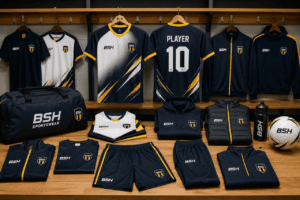
Over time, you may require training tops, trousers, tracksuits, hoodies, warm-up clothing and other garments.
Choosing a supplier capable of producing a broader range can make it easier to maintain consistent colours and branding across your organisation.
A cricket club, for example, might initially order custom cricket kits for its playing squads but later require coordinated training apparel for practice sessions and travel.
Working with one manufacturer can simplify this process and help create a more professional club identity.
6. Review Sizing Options Carefully
Incorrect sizing can turn an otherwise successful team order into a major problem.
Before placing a bulk order, ask how sizing is managed.
A good supplier should provide clear size information for the garments being ordered. This becomes particularly important when supplying an entire organisation containing different age groups and body types.
Schools, academies and clubs may require:
- Youth sizes
- Adult sizes
- Men’s fits
- Women’s fits
- Different garment lengths or cuts
Collecting accurate player sizes before production is considerably easier than trying to resolve sizing issues once dozens of personalised garments have been manufactured.
7. Check How the Design Approval Process Works
Your team should know what its sportswear will look like before bulk manufacturing begins.
Ask the manufacturer about its design and approval process.
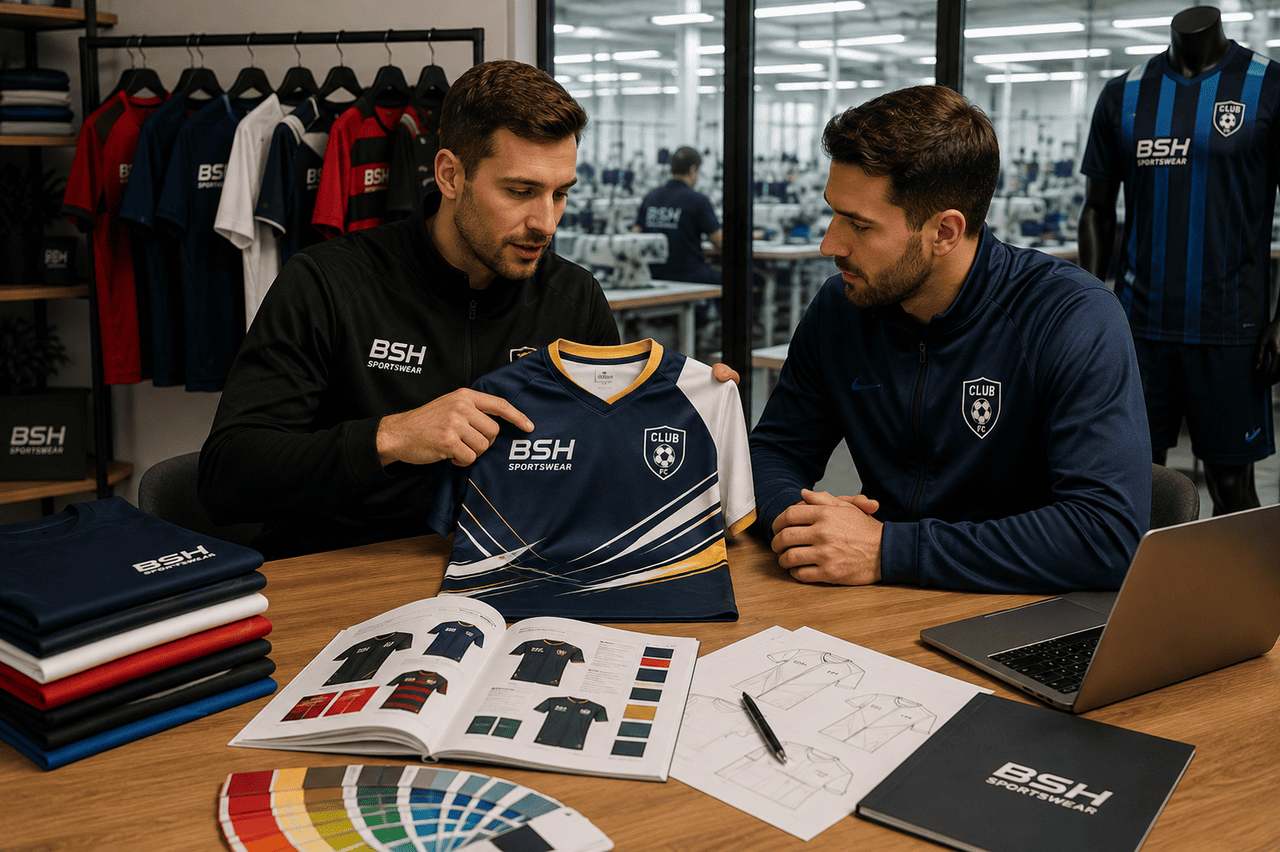
Typically, you will provide information such as your preferred colours, logos, sponsor artwork, garment requirements and any design references. The manufacturer can then use those details to prepare the proposed design.
Review every important detail before giving approval.
Check spelling, colours, logo placement, player numbers, sponsor positions and other elements carefully.
This is particularly important for highly visible garments such as custom basketball kits, where numbers, team names and graphic elements often form a major part of the overall design.
8. Think About Training Wear at the Same Time
Match kits receive most of the attention, but training clothing is worn far more frequently by many teams.
Planning both ranges together can create a much stronger visual identity.
Your match and training collections do not necessarily need identical designs. However, repeating colours, logos and selected graphic elements can make the whole range feel connected.
Coordinated custom training wear can include training shirts, quarter-zips, tracksuits, trousers, hoodies, gilets and other garments depending on the needs of the organisation.
This is particularly useful for academies and larger clubs that want players and coaching staff to maintain a recognisable appearance away from match day.
9. Ask About Minimum Order Quantities
Minimum order quantity, commonly called MOQ, is another important consideration.
Requirements can differ considerably between manufacturers and products. A small amateur team may have very different needs from a university programme or multi-team sports club.
Before investing time in design development, confirm whether the manufacturer’s production quantities are appropriate for your organisation.
You should also discuss how future repeat orders are handled.
Players join teams, garments become damaged and squad numbers change. Knowing whether additional pieces can be produced later can make managing your teamwear significantly easier.
10. Consider Quality Control
Bulk sportswear orders need consistency.
Imagine receiving 50 garments only to discover that colours vary between shirts or logos are positioned differently across the order.
Ask potential manufacturers how they check garments during and after production.
Quality control may cover factors such as stitching, sizing, colour consistency, printing, logo positioning and overall garment finishing.
This is especially important for detailed designs such as custom baseball kits, where piping, panels, lettering and numbers can all contribute to the finished appearance.
A reliable manufacturing partner should view consistency as part of the production process rather than something checked only after a problem occurs.
11. Evaluate Communication Before Ordering
Communication is one of the easiest things to assess before committing to a manufacturer.
Pay attention to how clearly the supplier responds to your questions.
Can they explain fabric choices? Do they understand your customisation requirements? Can they tell you what artwork they need? Are production and delivery expectations communicated clearly?
Sportswear manufacturing involves numerous details, and misunderstandings early in the process can become expensive mistakes later.
Clear communication is particularly valuable for bespoke orders because every club has different requirements.
12. Compare Value Rather Than Price Alone
Price will naturally influence any purchasing decision, particularly for grassroots clubs, schools and organisations working within fixed budgets.
However, the cheapest quotation is not necessarily the best value.
When comparing suppliers, consider what is actually included.
Look at garment quality, customisation, fabric, printing method, design support, quality control and the manufacturer’s ability to produce consistent repeat orders.
Saving a small amount per garment may not be worthwhile if the kit wears poorly or needs replacing sooner.
The objective should be finding a manufacturer capable of delivering the right balance of quality, customisation and cost for your organisation.
13. Make Sure the Manufacturer Can Grow With Your Club
Your requirements today may not be the same next season.
A football team might eventually introduce junior squads. A school could expand into additional sports. An academy may decide to introduce a complete training collection.
Choosing a manufacturer with a broad production capability gives you more flexibility.
For example, an organisation that initially purchases football apparel may later need rugby, cricket, basketball or other sportswear. Working with a manufacturer capable of producing multiple categories can simplify future sourcing and help maintain consistent branding.
This is where a broad custom sportswear manufacturing capability becomes particularly valuable for clubs and organisations looking for a longer-term supplier.
Questions to Ask Before Choosing a Sportswear Manufacturer
Before requesting your final quotation, it is useful to ask:
- What sportswear products can you manufacture?
- What fabrics do you recommend for our sport?
- What elements of the garments can we customise?
- Can you reproduce our club and sponsor logos?
- Which printing or decoration methods do you use?
- What sizing options are available?
- What is the minimum order quantity?
- How does design approval work?
- What quality checks are performed?
- Can we reorder additional garments later?
- What information do you need to provide a quotation?
A manufacturer should be able to answer these questions clearly before you proceed.
Choosing a Manufacturing Partner for Your Team
The right sportswear manufacturer should do more than put your logo onto a garment. They should understand how the clothing will be used, help translate your branding into a practical design and manufacture the finished products consistently.
BSH Sportswear produces bespoke sportswear for clubs, teams, academies, schools, businesses and sporting organisations. Our range covers match-day kits and coordinated training apparel, with custom colours, logos, sponsor branding, player numbers and other design requirements available according to the product.
Before placing an order, prepare your required garments, quantities, sizes, colours, logos and customisation requirements. Providing these details when you request a quotation makes it easier to evaluate your project accurately and move from initial concept toward production.