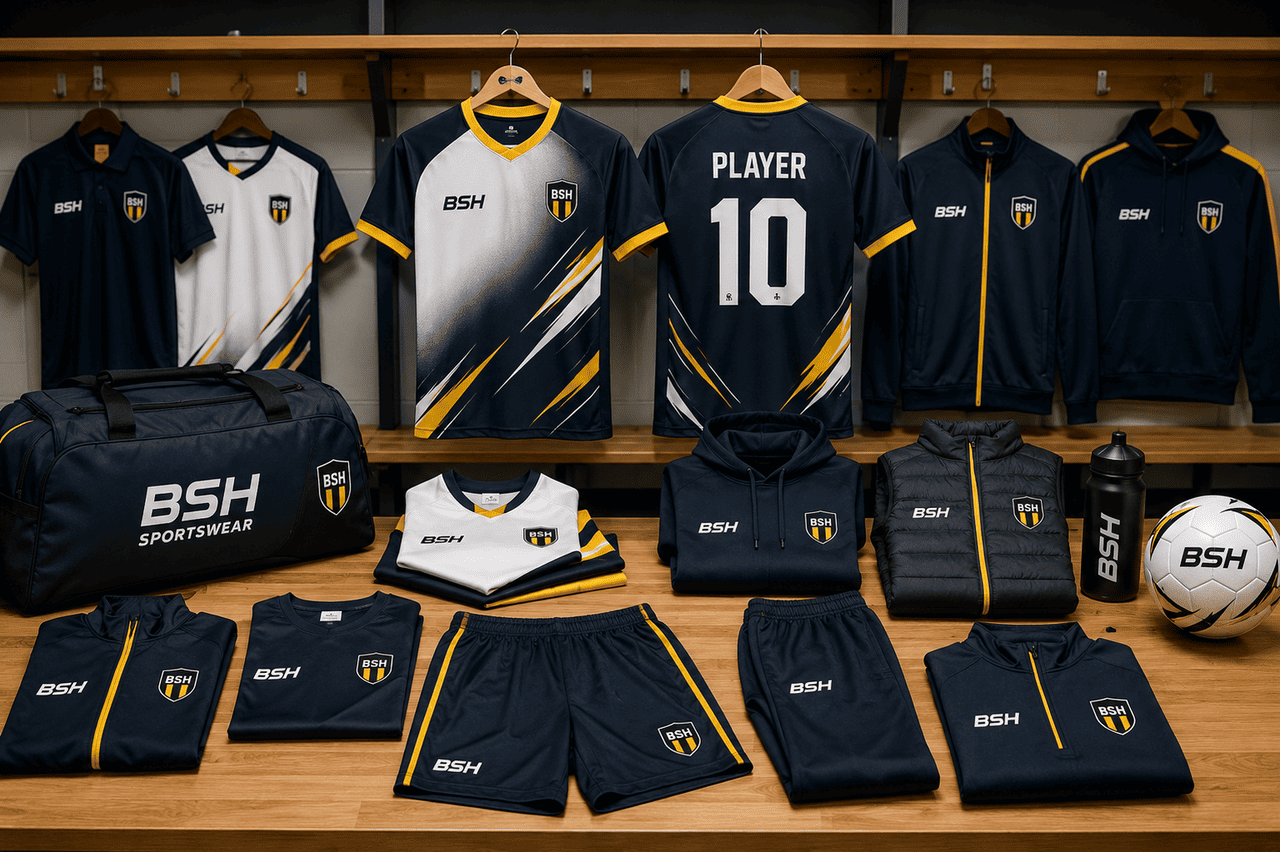
A sports club’s identity extends well beyond the kit players wear during a match. From arriving at the ground to warming up, training during the week and representing the club away from competition, coordinated teamwear helps create a professional and consistent appearance.
For clubs ordering new apparel, however, deciding exactly what to include can be difficult. A small grassroots team may only need match kits and training tops, while an academy, school, university or multi-team organisation could require a much broader clothing range.
Building a complete teamwear package starts with understanding when and how each garment will be used. Here are the key pieces clubs should consider when planning their next teamwear order.
Start With the Match-Day Kit
The match kit is naturally the centre of a club’s apparel collection.
Exactly what is required will depend on the sport. Football teams typically need shirts and shorts, while rugby, cricket, basketball and baseball each have their own garment requirements.
Match apparel should combine the club’s visual identity with practical performance considerations. Colour, fit, fabric, movement, breathability and durability all need to be considered alongside the design.
Football clubs looking to create a coordinated playing identity can start with custom football kits developed around their club colours, crest, sponsors and squad requirements.
The important point is to establish the main match-day design first. Elements of that design can then influence the rest of the teamwear collection.
Consider Home and Away Requirements
One match kit may not be enough.
Depending on the competition and sport, clubs may need alternative colours to prevent clashes with opposing teams. Creating home and away designs at the same time also provides an opportunity to establish a consistent design language.
The two kits do not have to look identical.
For example, a club could use its traditional colours for the home kit while introducing a contrasting away colour. Repeating certain patterns, number styles or branding details can still make both designs recognisably part of the same club.
Larger organisations should consider these requirements before production rather than ordering an alternative kit separately later.
Don’t Forget Specialist Playing Garments
Different sports and positions can create additional apparel requirements.
A football club may require goalkeeper clothing. Cricket teams can require different playing garments depending on their format and competition. Other sports have their own position-specific or competition-specific requirements.
This is why clubs should prepare a garment list before requesting a quotation.
Rather than simply stating that you need “kits for 20 players,” identify exactly what each squad requires. This allows the manufacturer to understand the scope of the order and reduces the likelihood of something being overlooked.
Add Training Shirts to the Package
Players may wear their match kit once or twice a week, but training apparel can be used considerably more often.
A dedicated training shirt prevents match jerseys from being subjected unnecessarily to repeated practice sessions and washing.
Training shirts can use simpler designs while still incorporating club colours, badges and sponsor branding.
For organisations running several squads, coordinated custom training wear can also make sessions look more organised and professional. Coaches can quickly identify players, and everyone remains visually connected to the club.
Training apparel can be designed alongside the match collection so that colours and branding remain consistent.
Include Training Trousers and Shorts
Training bottoms are another practical part of the package.
The appropriate choice depends on the sport, season and training environment. Shorts may be suitable for high-intensity sessions and warmer conditions, while training trousers provide additional coverage for cooler weather, warm-ups and travel.
Clubs do not necessarily need to order every possible garment.
Think about how players actually train throughout the year and select items that are likely to receive regular use.
This approach can be particularly useful for grassroots clubs working within a defined budget.
Consider Quarter-Zips and Midlayers
UK teams regularly train in conditions where a short-sleeve shirt alone may not be sufficient.
Quarter-zips and other long-sleeve training tops can provide an additional layer for warm-ups and cooler sessions without requiring players to train in heavy outerwear.
They also work well as staff apparel.
Coaches can wear coordinated tops during training while remaining visually distinct from players if required.
When designed in the same colours as the rest of the collection, these garments help extend the club identity beyond the match kit.
Tracksuits Can Serve Several Purposes
A coordinated tracksuit is one of the most versatile additions to a teamwear package.
Players can use tracksuit jackets and trousers while travelling, warming up, attending competitions or representing the club at events.
For academies, schools and larger organisations, tracksuits can be particularly useful because they create a consistent appearance when groups travel together.
The design does not need to replicate the match kit exactly. Using the same club colours, badge and selected visual details is usually enough to connect the garments.
Individual player initials or squad identifiers can also be considered where appropriate.
Hoodies and Gilets Extend the Range
Not every item in a teamwear collection needs to be designed specifically for competition.
Hoodies and gilets provide useful options for players, coaches and support staff before and after sessions.
A branded hoodie can work for training, travel and casual club use, while a gilet provides an additional layer without restricting the arms.
These products can also help clubs build a more complete identity away from the playing area.
The key is consistency. A hoodie should not look as though it comes from an entirely unrelated collection simply because it is not part of the match kit.
Different Sports Need Different Packages
There is no universal teamwear package suitable for every sport.
Rugby clubs, for example, need to consider the physical demands placed on their playing apparel. Purpose-designed custom rugby kits should therefore form the foundation of the rugby match-day collection, with complementary training garments selected separately.
Cricket presents different requirements. A club may need playing shirts and trousers as well as training clothing appropriate for practice sessions.
Teams developing custom cricket kits should consider whether multiple squads or formats need different colour schemes while retaining the same club identity.
Basketball organisations may place greater emphasis on sleeveless jerseys, shorts and warm-up apparel. With custom basketball kits, prominent numbers and team branding can become major elements of the overall visual identity.
Baseball clubs have their own requirements for shirts, trousers and related teamwear. When planning custom baseball kits, clubs should consider how lettering, player numbers, colour panels and other details will carry through the wider apparel collection.
This is one reason working with a manufacturer capable of producing multiple sports can be useful for schools, universities and multi-sport organisations.
Create a Consistent Club Identity
A complete package does not mean every garment must look identical.
In fact, forcing the exact match-kit design onto every item can sometimes make the overall range less practical.
Instead, establish several elements that remain consistent throughout the collection.
These might include the primary club colours, secondary colours, badge position, typography, sponsor treatment and one or two distinctive graphical elements.
A navy-and-orange football shirt, for example, could be accompanied by a predominantly navy training top with subtle orange details.
The garments look different, but they clearly belong to the same organisation.
Plan Branding and Sponsor Placement Early
Club badges and sponsors should be considered while the garments are being designed rather than added as an afterthought.
Create a list of the branding required on each product.
The match shirt may carry a primary sponsor, while a training top could have a different sponsor arrangement. Staff garments might only require the club crest.
Check whether sponsor agreements specify particular logo sizes, positions or colours.
Providing the correct artwork at the beginning of the project can also make the design and approval process more efficient.
Decide Which Garments Need Personalisation
Not every piece of teamwear necessarily requires a player’s full name and number.
Match garments may need squad numbers, while training clothing might use player initials. Tracksuits could use initials to make individual garments easier to identify.
Personalisation should therefore be planned garment by garment.
Before production, check all spelling, initials and numbers carefully.
Mistakes become considerably more difficult to correct once personalised apparel has been manufactured.
Think About Players, Coaches and Staff
A teamwear order should not necessarily stop with the playing squad.
Coaches, managers and other support staff may also need club apparel.
Providing coordinated staff clothing contributes to a professional appearance during matches, training sessions and events.
Staff garments could use the same core colour palette while being differentiated from player clothing. This makes coaches easy to recognise without breaking the visual identity of the organisation.
Account for Junior and Senior Teams
Multi-team clubs need additional planning.
If your organisation has junior, academy, reserve and senior squads, decide whether every team will use the same design.
Using a shared identity can create stronger consistency across the club. However, garment sizing and personalisation requirements can vary considerably between squads.
Collect accurate sizing information before submitting the final order.
It can also be useful to determine whether the same designs will remain in use for several seasons, particularly for organisations expecting new players to join regularly.
Build the Package Around Your Budget
A “complete” package does not mean buying every garment available.
Prioritise the products your team genuinely needs.
A smaller club might begin with:
- Match-day apparel
- Training shirts
- Training shorts or trousers
- One warmer training layer
- Staff clothing where required
A larger organisation might add tracksuits, hoodies, gilets and additional match or training designs.
Planning the order in tiers helps clubs distinguish essential items from optional additions.
Prepare Before Requesting a Teamwear Quote
The more information you provide to a manufacturer, the easier it is to discuss your project accurately.
Before requesting a quotation, prepare details covering your sport, required garments, approximate quantities, size range, club colours, logos, sponsor artwork, player personalisation and delivery requirements.
You should also identify whether different squads need different garments.
BSH Sportswear manufactures bespoke match kits and training apparel for clubs, academies, schools, universities and sporting organisations. Teamwear can be developed around your colours, branding and individual garment requirements, allowing match and training collections to form part of one coordinated identity.
A well-planned package ultimately gives your organisation more than matching clothing. It creates a recognisable club identity that can extend from training sessions and match days to travel and events.