When ordering team sportswear, the design itself is only part of the decision. Clubs, schools, academies and sporting organisations also need to consider how colours, patterns, logos, numbers and sponsor branding will be applied to the garments.
Two terms that frequently appear during this process are sublimation printing and traditional garment printing. Although both can produce professional-looking sportswear, they work differently and can affect design freedom, garment feel, durability and the type of kit you can create.
Understanding those differences can help your organisation choose an appropriate production method before approving a teamwear order.
What Is Sublimation Printing?
Sublimation is a printing process widely used for polyester-based performance garments.
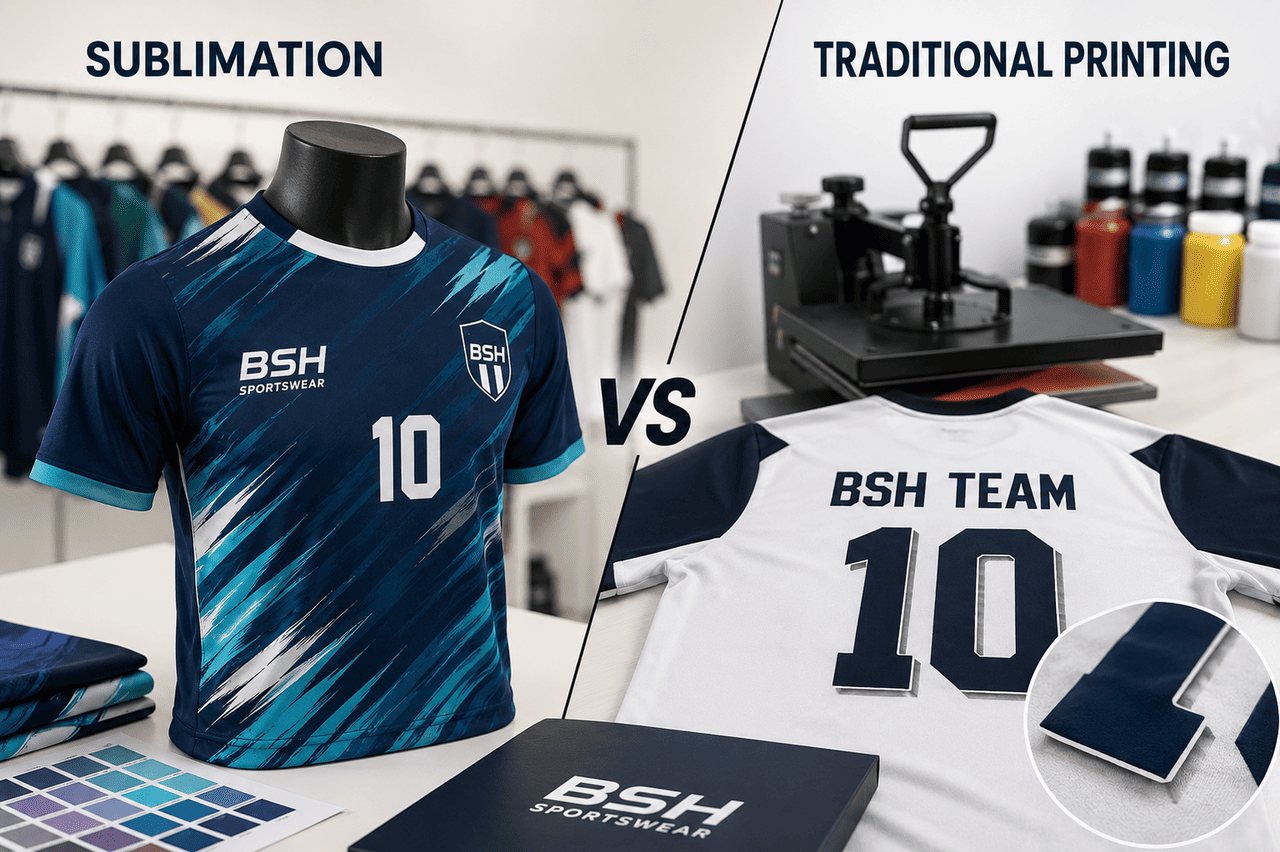
Instead of applying a separate layer of ink or material onto the finished surface, sublimation uses heat to transfer a design into compatible fabric. The result is a printed design that becomes part of the garment material rather than forming a noticeable layer on top.
This is particularly useful for modern teamwear because a design can cover large sections of a garment.
A club can incorporate colours, gradients, geometric patterns, numbers, names and other graphical details without being restricted to a small printed area.
This flexibility makes sublimation particularly well suited to distinctive team kit designs.
What Is Traditional Sportswear Printing?
“Traditional printing” can refer to several decoration methods, including screen printing and different types of heat-applied graphics.
With these methods, the required logo, number, lettering or graphic is generally applied to the surface of the garment.
The exact process varies depending on the decoration technique being used. Some are ideal for simple logos or lettering, while others allow more detailed graphics.
These techniques continue to have a place in sportswear manufacturing. The right choice depends on the garment, fabric, design, order requirements and intended use.
The important point is that surface-applied decoration behaves differently from a design incorporated into compatible fabric through sublimation.
Sublimation Offers Greater Design Freedom
One of the strongest advantages of sublimation is the amount of creative freedom it provides.
Imagine a team wants a shirt featuring:
- Two or three club colours
- A gradient across the body
- A geometric background pattern
- Player numbering
- Sponsor branding
- Contrasting sleeve graphics
Creating this type of design is particularly suited to sublimation because multiple graphical elements can be incorporated into the overall artwork before the garment is produced.
This is useful when designing custom football kits, where clubs may want home and away designs that maintain the same identity while using very different colour combinations.
Instead of treating every graphic as an isolated addition, the whole shirt can be considered as one coordinated design.
How Does Each Method Affect the Feel of the Garment?
Performance clothing needs to remain comfortable while players are moving.
Because a sublimated design is incorporated into suitable fabric, the printed areas do not create the same type of additional surface layer associated with some applied decoration methods.
This can be particularly beneficial when graphics cover large areas of a shirt.
The underlying performance characteristics of the garment still depend heavily on the fabric, construction and fit, so printing method should never be considered in isolation.
Teams should evaluate the complete garment rather than assuming that one production technique automatically guarantees better performance.
What About Durability?
Durability is one of the biggest considerations when buying sportswear for regular use.
Match shirts and training garments can go through repeated cycles of wearing, sweating and washing throughout a season.
With sublimation, the design is incorporated into compatible fabric. This means there is no large printed surface layer that can peel away in the same way some externally applied graphics potentially can.
That characteristic makes sublimation attractive for garments that require extensive graphics or all-over designs.
For demanding sports, however, print durability is only one consideration. Fabric strength, seams and garment construction are equally important. Teams purchasing custom rugby kits, for example, should consider how the entire garment is constructed for the physical demands of the sport rather than choosing solely on the appearance of the print.
Club Colours and Complex Patterns
Consistency matters when a team is trying to establish a recognisable visual identity.
Sublimation gives designers considerable flexibility when building patterns around club colours. Stripes, fades, angular graphics and other visual elements can be incorporated across different panels.
This is particularly useful when a club wants something more distinctive than a plain stock garment.
A cricket organisation, for example, may want its custom cricket kits to use the same core colours as the rest of the club while adapting the layout for match requirements.
The design can then be developed around those colours instead of simply adding a badge to an off-the-shelf shirt.
Adding Player Names and Numbers
Personalisation is another major part of team sportswear.
Depending on the sport and design, garments may require player numbers, names, initials or squad identifiers.
With sublimation, these elements can potentially be incorporated into the artwork during production. This provides an opportunity to make the numbering and lettering feel like part of the overall garment design.
It is particularly useful for sports where player numbers are visually prominent.
On custom basketball kits, for example, front and back numbering is an important design feature. A coordinated approach allows the number style, team colours and jersey graphics to work together rather than appearing as unrelated elements.
Teams should nevertheless confirm all names and numbers carefully before approving personalised production.
How Are Sponsor Logos Handled?
Sponsor visibility can be important for grassroots clubs, schools, academies and competitive teams.
The suitability of a particular branding technique depends on factors such as the logo, garment, fabric and required finish.
Sublimation can incorporate compatible sponsor artwork directly into the overall printed design. This is particularly useful when multiple branding elements need to be included.
Before production, clubs should provide clean, high-quality artwork wherever possible.
It is also worth confirming the positioning and dimensions of every sponsor logo during the design approval stage. A small error in the artwork can become much more significant once an entire team order has been produced.
Is Sublimation Suitable for Every Garment?
No single printing method is ideal for every type of sportswear.
Sublimation works particularly well with compatible polyester-based fabrics, which are commonly used in performance teamwear. However, teams may also order garments made from other materials or products where a different branding technique is more appropriate.
That is why clubs should avoid selecting a printing process before considering the actual product.
The better approach is to explain the intended use, required design and branding to the manufacturer and determine which production method fits those requirements.
Match Kits vs Training Wear
Another consideration is whether your club wants the same visual identity across match-day and training apparel.
Match kits may feature highly distinctive graphics, while training garments are often designed to be simpler and versatile enough for frequent use.
However, the two ranges can still share colours, logos and selected visual elements.
Coordinating match apparel with custom training wear helps establish a consistent identity across players, coaches and support staff. This can be especially valuable for academies, universities and multi-squad clubs where team presentation extends beyond match day.
Different garments within that collection may use different decoration methods depending on their fabric and construction.
Is Traditional Printing Still a Good Option?
Yes.
Sublimation should not be treated as a universal replacement for every other garment-decoration technique.
Traditional methods can be entirely appropriate when a team requires relatively simple branding, when the garment material is not suitable for sublimation, or when a particular finish is desired.
For example, a club may have garments that only require a badge or small sponsor logo rather than a complete all-over design.
The decision should therefore be based on the product and design rather than the assumption that one technique is always superior.
Which Method Is Better for Bespoke Team Kits?
For highly customised performance kits made from suitable fabrics, sublimation offers several useful advantages.
It provides considerable design freedom and allows complex graphics to be incorporated across the garment. This makes it particularly attractive to teams that want their kit to have a distinctive visual identity.
Traditional printing methods remain valuable where the design, garment or fabric calls for them.
A good sportswear manufacturer should therefore look at the complete specification before recommending a production method.
Questions to Ask Before Choosing a Printing Method
Before approving your teamwear, ask your manufacturer:
- What fabric will be used for the garment?
- Is the material suitable for sublimation?
- How will our club badge be reproduced?
- How will sponsor logos be added?
- Can player names and numbers be incorporated?
- Are there restrictions on colours or patterns?
- How should the garments be washed and cared for?
- Which decoration method is recommended for this particular product?
These questions help move the conversation away from simply asking which printing method is “best” and towards choosing the method that works best for the actual garment.
Creating Sportswear Around Your Club Identity
The biggest advantage of bespoke sportswear is the opportunity to create something that genuinely represents your organisation.
Colours, patterns, club badges, sponsor artwork and player details can all contribute to that identity. The production method should support the design rather than unnecessarily limiting it.
BSH Sportswear manufactures bespoke match and training apparel for different team sports. Depending on the garment and project requirements, designs can be developed around club colours, logos, sponsor branding and player personalisation.
Whether you are developing football, rugby, cricket, basketball, baseball or training apparel, preparing your design requirements before requesting a quote will help the manufacturing process run more smoothly.